

 Facebook
 X
 Pinterest
 Copy Link
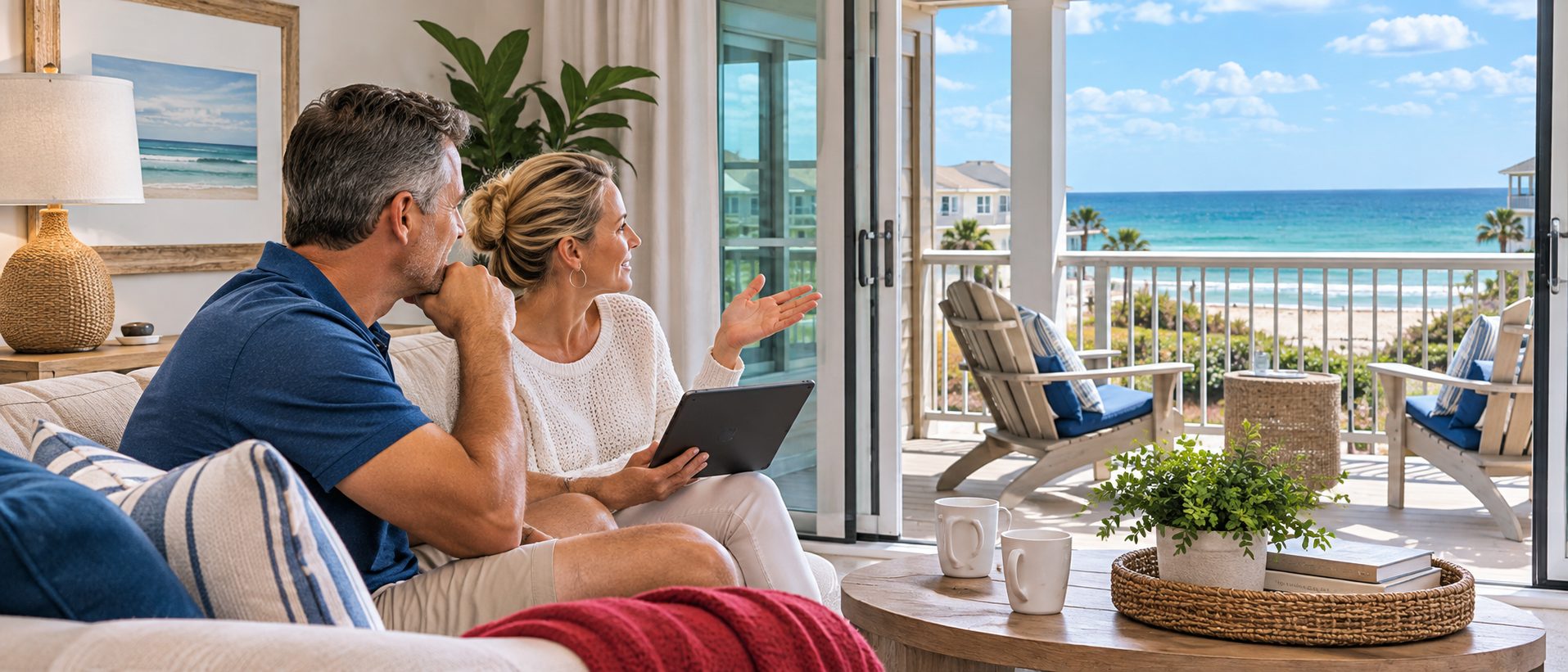
There’s something exciting about the idea of owning a second home along the Emerald Coast.
Maybe you picture long weekends at the beach, holidays with family, or having a place where you can escape whenever your schedule allows.
And I get it. There’s a lot to love about having your own place here.
But before we start looking at Gulf views, balconies, floor plans, and amenities, there’s a question I think every second-home buyer should answer.
How are you actually going to use this property?
Not how you imagine using it on the perfect vacation.
How it will fit into your real life.
Because the second home that looks amazing during a showing isn’t necessarily the one that will make the most sense to own.
Start With Your Calendar, Not the Listing Photos
One of the first things I’d encourage you to think about is how often you’ll realistically be here.
Are you planning to visit for a few long weekends each year? Spend the entire summer? Escape colder weather for several months? Eventually retire here?
Those are very different ownership plans.
If you’re only visiting occasionally, convenience may matter more than having extra square footage. You might appreciate a condominium where exterior maintenance is handled through the association, even if that comes with monthly fees and restrictions.
If you’re planning to spend several months here, you may care more about storage, a functional kitchen, parking, and having enough room to settle into a routine.
And if your long-term plan is to make the property your primary residence, you’ll probably want to evaluate it differently altogether.
I often remind buyers that the right fit matters more than the most impressive property.
That applies just as much to a second home as it does to the house you live in every day.
Think About What Happens When You’re Not Here
This is one of the biggest differences between buying a primary residence and purchasing a second home.
When you live in a property full-time, you’re there to notice things.
A small leak. An air-conditioning problem. A storm that damages something outside. A maintenance issue that needs attention.
When your second home sits vacant for weeks or months, those responsibilities don’t disappear.
Someone still needs to keep an eye on the property.
Depending on the home, you may need arrangements for regular inspections, landscaping, pest control, HVAC maintenance, storm preparation, and access for repairs.
Condominiums can simplify certain responsibilities, but it’s important to understand exactly what the association maintains and what remains your responsibility.
And if you’re buying a single-family home, you’ll want to think about how those tasks will be handled when you’re hundreds of miles away.
This is where having reliable local resources becomes especially valuable.
I’ve talked about why the people you choose matter almost as much as the house. For second-home owners, those relationships can continue to matter long after closing.
Location Should Match the Way You Spend Your Time
Two properties can be equally beautiful and offer completely different experiences.
Maybe you’re drawn to a Gulf-front condominium in Destin because you want to walk downstairs and be on the beach.
Or perhaps you’d rather have a home in Miramar Beach with more room for visiting family and easier access to the places you enjoy.
Along 30A, you may be considering a community where walking, biking, and spending time at local restaurants are part of the appeal.
There’s no universal right answer.
But there are practical questions worth asking.
How easy is it to reach the property when you arrive? Where will you park? How far will you need to carry groceries or beach equipment? What happens when family and friends visit?
And how does the area feel during the times of year you’ll actually be using the home?
The Emerald Coast changes with the seasons. Traffic, visitor activity, parking, and access to popular destinations can all affect your experience.
I would rather have those conversations before you buy than discover afterward that the location doesn’t support the lifestyle you expected.
Decide Whether It’s a Personal Retreat or an Investment
This is a conversation I think buyers should have early.
Are you buying the property primarily because you want a place to enjoy?
Or are you expecting it to generate rental income?
Maybe you’re hoping for a combination of both.
There’s nothing wrong with any of those goals. But they can lead to different property choices.
A home that’s ideal for your family’s personal use may not have the features or location that support your rental objectives.
And a property that looks attractive from an investment standpoint may come with management requirements, restrictions, and expenses that don’t fit your idea of a relaxing second home.
If rental income is part of your plan, you’ll want to evaluate actual operating costs, management arrangements, applicable regulations, association restrictions, insurance, and realistic income expectations.
That’s why I encourage buyers to understand their Emerald Coast investment property strategy before choosing a property based on projected returns.
And remember, rental income isn’t guaranteed. The numbers need to make sense under reasonable assumptions, not just an optimistic projection.
Know which goal comes first.
That makes it much easier to evaluate the tradeoffs.
Don’t Overlook the Cost of Convenience
Convenience is valuable.
But it isn’t always free.
A condominium may offer exterior maintenance, shared amenities, and less hands-on responsibility than a detached home.
Those services can be appealing when you don’t live nearby.
However, association fees, insurance arrangements, reserves, special assessments, and maintenance responsibilities deserve careful review.
A single-family home may give you more control over the property, but that can also mean arranging and paying for more services yourself.
Neither ownership structure is automatically easier or less expensive.
It depends on the property and your circumstances.
For condominium buyers, I’ve covered some of the important questions in Emerald Coast condos, HOA health, reserves, and insurance.
I would encourage you to understand those obligations before deciding that one property is more convenient than another.
Will This Home Still Work Five or Ten Years From Now?
Second homes often begin with a particular vision.
A place for family vacations.
A getaway for two.
A property you hope to enjoy during retirement.
But life changes.
Children grow up. Family gatherings get larger or smaller. Travel schedules change. Stairs become less appealing. Maintenance may become something you’d rather not manage.
You don’t have to predict every possibility.
But I do think it’s worth considering whether the property gives you reasonable flexibility.
Would you still enjoy the location if you spent more time there?
Could the layout work for a longer stay?
Would you be comfortable with the ongoing expenses if your usage changed?
And if you eventually decided to sell, would the property appeal to buyers beyond those who share your exact plans?
A second home should be something you enjoy owning, not something that only works under one set of circumstances.
The Best Second Home Isn’t Always the One With the Best View
I love a beautiful coastal property as much as anyone.
But I’ve learned that the features that catch your attention during a showing aren’t always the ones that determine how happy you’ll be with a purchase.
Sometimes it’s the parking.
Sometimes it’s how easily you can get there.
Sometimes it’s the maintenance you don’t have to worry about.
And sometimes it’s knowing you have the right people nearby when something needs attention.
That’s part of what I want buyers to think about before making a second-home purchase along the Emerald Coast.
Not just what the property looks like, but what owning it will actually involve.
If you’re considering a second home in Destin, Miramar Beach, along 30A, or elsewhere in Northwest Florida, let’s talk about how you want to use it before we start narrowing down properties.
I can help you evaluate the options, ask the right questions, and connect with the professionals who can provide the specialized information you need.
The right second home should fit the life you want to live—and the responsibilities you’re comfortable taking on.
And when you have the right information and the right people in your circle, you can make that decision with a lot more confidence.
Let’s keep building smarter circles.
