

 Facebook
 X
X
 Pinterest
 Copy Link
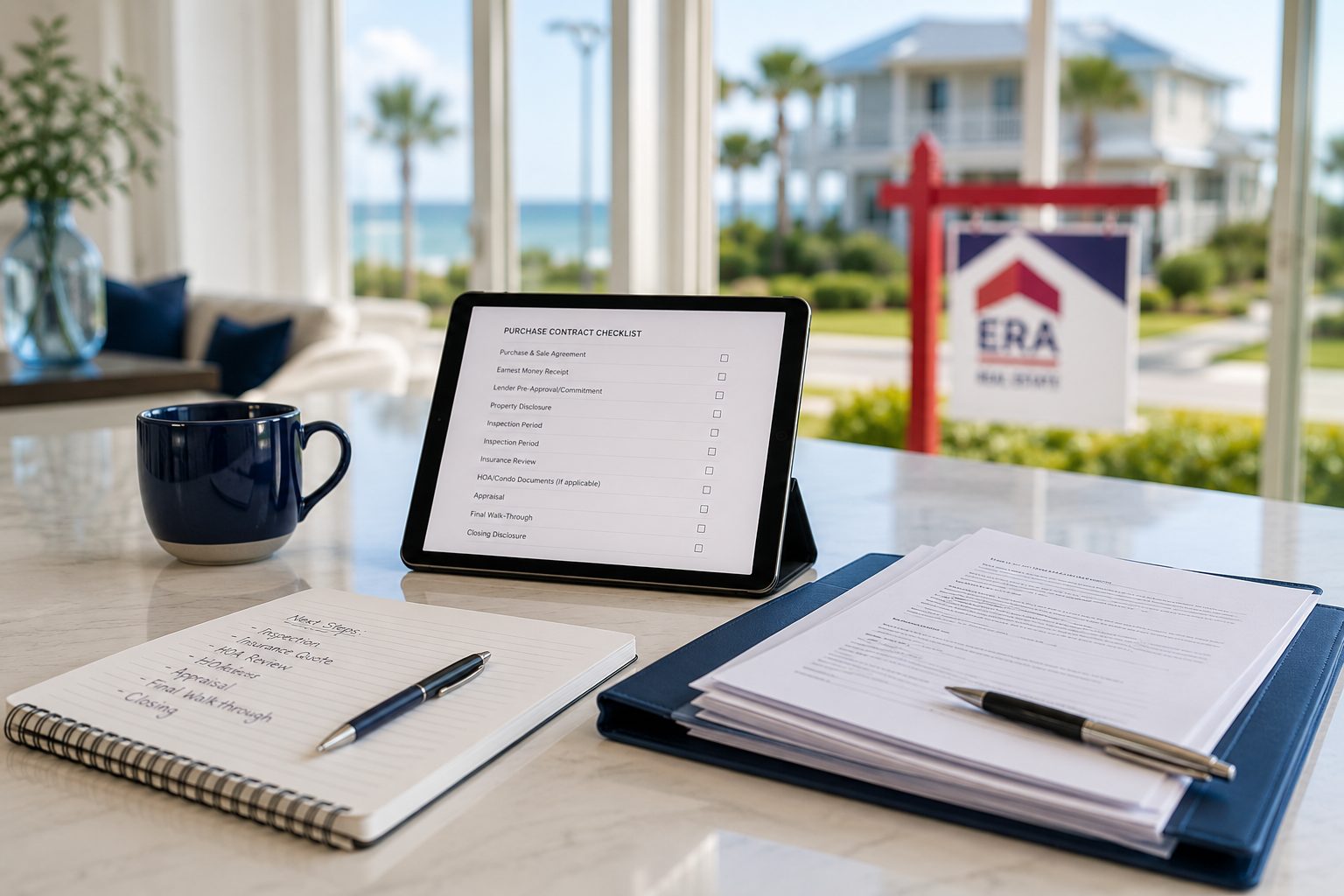
Once you go under contract on a home, most buyers feel like the hard part is over.
In reality, this is where the details matter most.
The period between contract and closing is where deals either come together — or start to fall apart.
Here’s what actually happens during that window, and where I see issues come up most often.
The Contract Is Just the Starting Point
Going under contract means you’ve agreed on price and basic terms.
It doesn’t mean:
- The home is fully approved
- Insurance is finalized
- The property has cleared inspection
- Financing is locked
This phase is where we verify everything behind the scenes.
If you’re just starting your search, I outline the full process in my Complete Guide to Buying Property on the Emerald Coast.
1. Inspection: What the Property Actually Tells You
Inspections are where expectations meet reality.
Even well-maintained homes can reveal:
- Roof wear
- HVAC issues
- Moisture concerns
- Structural items
- Deferred maintenance
Most issues aren’t deal breakers.
But how they’re handled matters.
This is where negotiation, timelines, and communication all come into play.
2. Insurance: The Quiet Deal-Changer
On the Emerald Coast, insurance can shift a deal quickly.
After contract, we confirm:
- Actual insurance quotes
- Wind and flood requirements
- Roof insurability
- Coverage limitations
If insurance comes back significantly higher than expected, buyers sometimes pause — or renegotiate.
This is why I emphasize reviewing insurance early when comparing homes on the Emerald Coast.
3. Condo and HOA Review (If Applicable)
If the property is a condo or in an HOA, we review documents during this period.
This includes:
- HOA budgets
- Reserve funding
- Rules and restrictions
- Special assessment history
Unexpected findings here can change a buyer’s decision.
I break down these factors more in my post on Emerald Coast condo HOA and insurance considerations.
4. Appraisal: Value vs. Contract Price
If financing is involved, the lender requires an appraisal.
If the property appraises:
- At value → move forward
- Below value → renegotiation or buyer cash adjustment
In a balanced market, this becomes part of strategy — not panic.
I’ve shared more about how market conditions affect negotiation in my Emerald Coast real estate market 2026 update.
5. Financing and Timeline Pressure
Even strong buyers can hit friction here:
- Documentation requests
- Loan condition updates
- Rate lock timing
- Employment verification
Most of this is routine — but delays can affect closing timelines.
Clear communication keeps this moving.
Where Deals Actually Fall Apart
Most contracts don’t fail because of one major issue.
They fall apart because of:
- Stacked small surprises
- Misaligned expectations
- Lack of early clarity
- Emotional reactions to manageable problems
This is where the right working relationship matters.
I talk more about this in The Right Fit Matters, because alignment early prevents friction later.
The Bottom Line
Going under contract is an important step — but it’s not the finish line.
It’s the phase where decisions become real.
When inspections, insurance, HOA review, and financing are handled with clarity and strategy, deals stay together.
If you want to walk through what this phase would look like for your situation, I’m always happy to talk it through.
Clarity keeps deals moving.
Let’s keep building smarter circles.
